Announcing that the great day of the lord is nearer than you think. O Come let us adore him - Luke 2:13
10-13
יוֹבֵל
10th of Tishrei — Yom Hakippurim
Ring H
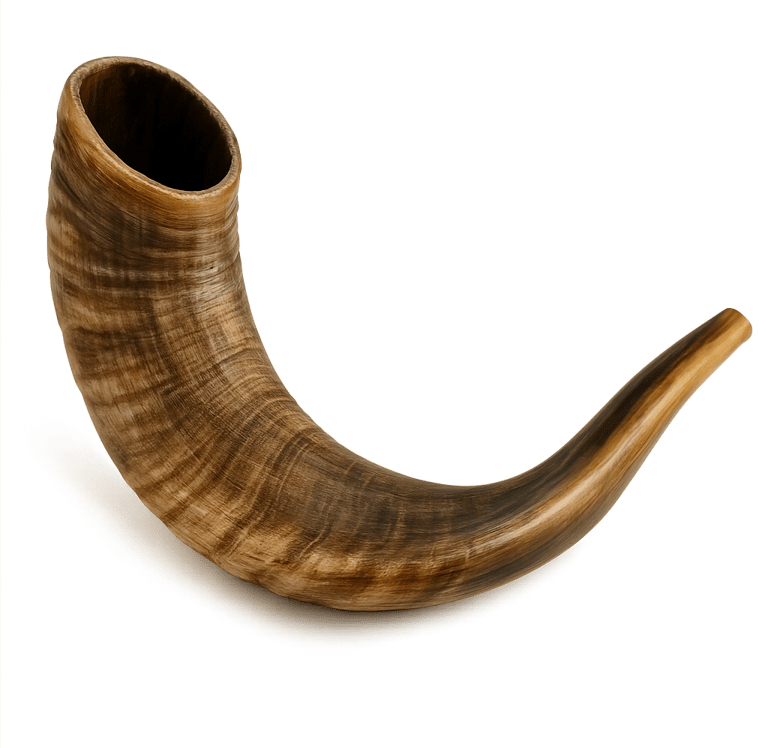

Yovel - Jubilee
Yovel begins only when the shofar is sounded on the 10th of Tishrei (Yom Hakippurim).
The Yovel (יוֹבֵל) is the fiftieth year, the great octave of Israel’s calendar, rising only after seven full sevens have run their course (Leviticus 25:8: “You shall count seven sabbaths of years… forty‑nine years.”). It is the year that stands beyond the grid of ordinary time, the year that refuses to be owned, the year that belongs to God alone.
It stands alone in Torah, commanded with precision in Leviticus 25, where its architecture is carved without ornament or ambiguity (Leviticus 25:10–13). No other chapter carries such a concentrated blueprint of release, return, and restoration. The Yovel is not a suggestion; it is a divine interruption.
In that year the land itself exhales. Leviticus 25:11–12 declares it a year of no sowing, no reaping, no gathering of what grows of itself. The land is not merely unused, it is untouched, as though the soil itself is given back to its Maker.
No plow cuts the soil, no seed is trusted to the earth, no harvest is claimed as profit. This is not agricultural minimalism; it is covenantal theology. The land is placed under divine lock and key for one full year.
The ground rests, mirroring the shemittah year, but with a deeper stillness, as though creation remembers Eden for a moment and refuses to be owned. The Shemitah is rest; the Yovel is rest intensified. The Shemitah pauses the land; the Yovel pauses the nation. The Shemitah interrupts labor; the Yovel interrupts ownership.
In the prophetic future, still ahead of us, the Scriptures speak of Israel not as a vague spiritual abstraction but as a nation restored in its full tribal architecture. Ezekiel does not see a blended people; he sees twelve tribes with twelve inheritances, surveyed and measured with divine exactness (Ezekiel 47–48). Isaiah does not hear a metaphor; he hears a great shofar summoning the exiles home from the ends of the earth (Isaiah 27:13). And the Revelation does not present an indistinct multitude; it names twelve tribes, sealed and numbered by God Himself (Revelation 7:4–8).
The Yovel is the Torah’s own confirmation of this tribal reality. It is the only moed that requires:
return to the ancestral land,
return to the ancestral family,
return to the ancestral inheritance (Leviticus 25:10, 13).
The Jubilee is not merely economic reset, it is tribal re‑alignment. It snaps Israel back to the map God drew, the boundaries God assigned, the identities God preserved.
So it is no stretch, no leap at all, to see the future return of Israel functioning in the same pattern. If the Yovel was God’s mechanism for restoring tribal identity in the past, it is entirely consistent with the prophetic witness that He will employ a similar mechanism in the future. And Scripture does not leave us without foundation.
Yes, there is scriptural basis. Strong basis. Architectural basis.
The Yovel is the Torah’s mechanism for restoring the tribes (Leviticus 25). The prophets describe a future restoration of Israel in tribal form (Ezekiel 47–48). The future shofar is Jubilee‑shaped (Isaiah 27:13). The Messiah is the One who blows it (Matthew 24:31). And only God knows the true tribal lines, just as only God could enforce them in the Yovel (Amos 9:9; Psalm 87:6).
The past Jubilee restores the tribes. The future Jubilee gathers them. The Messiah completes them.
This is not speculation. It is the prophetic geometry of Scripture, the Yovel behind us, the Yovel before us, and the Messiah standing at the center of both.


Faith
Nature
contact@tishrei15.com
© 2025. All rights reserved.