Announcing that the great day of the lord is nearer than you think. O Come let us adore him - Luke 2:13
Ring H
9-13
Yom Hakippurim
Day of the Atonings
יוֹם הַכִּפֻּרִים
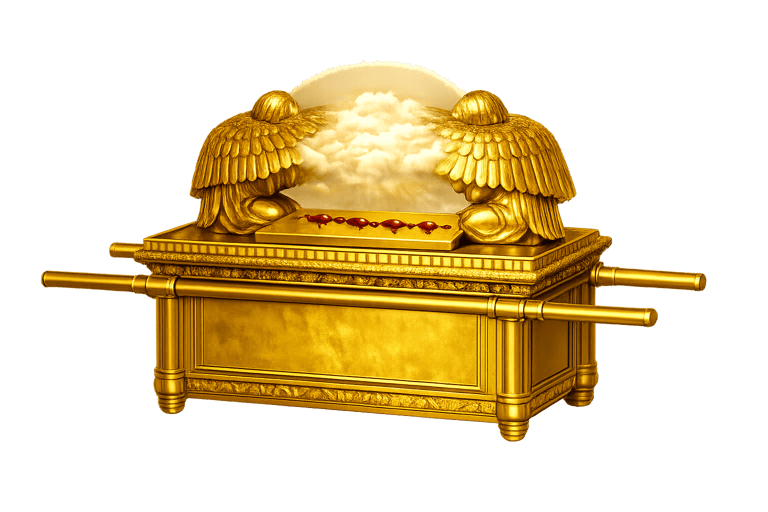
Two things must be taken with absolute seriousness: Leviticus 17:11 and the presence of the High Priest. Without these, there is no atoning. To understand atoning at all, you must stand before the pair of cherubim, the guardians at the Garden and the guardians atop the Ark, because the boundary they enforce is the same boundary that separates humanity from the Presence. The cherubim atop the Ark function exactly as they did at Eden: they permit only the correct korban, brought only by the High Priest, and only under the conditions God Himself has set. This is why even the High Priest could die, and the atoning be rejected, if he crossed that threshold without obedience. This is why a rope was tied around him. This is why he had to show himself alive afterward, evidence that mediation had been accepted. And this is why Yeshua had to show Himself to us: it is His priestly duty. The High Priest must pass between the cherubim, into the Heavenly Tabernacle, into the true Holy of Holies, to the real Ark, where blood must come near to the kapporet. Only then is atoning accomplished; only then is Eden’s barrier answered.
This is precisely where sacerdotal religion, whether Catholic, Orthodox, or Protestant, cannot follow. The priestly character of worship, where ordained clergy mediate sacred actions, offer the Eucharist, or preside at the table, lacks the one thing Scripture makes non‑negotiable: the crossing of the boundary into the Heavenly Tabernacle, the breach of the line the cherubim enforce. This is where Rabbinic Judaism is not Biblical Judaism, because the distinction is clear: without the High Priest, without the korban, without the blood brought near to the kapporet, it no longer contains the architecture of atoning. Islam, for all its devotion and moral seriousness, does not claim atoning at all. Both systems stand outside the boundary the cherubim guard, because neither crosses into the Heavenly Tabernacle, neither breaches the barrier of Eden, neither brings the blood to the place where nearness is restored. Sacerdotal liturgy can reenact, symbolize, commemorate, or proclaim, but it cannot pierce the threshold guarded since Eden. Only the true High Priest crosses that line. Only He passes between the cherubim. Only He brings the korban the Presence receives. Without that boundary‑crossing, without that ascent, without that nearness, it is not atoning, because atoning is not ceremony but the actual approach, the movement into the place where the Presence dwells and where the blood must come near to the kapporet. Even the Protestant view, where Communion is a memorial, a proclamation, or a symbolic participation, remains outside that boundary. It may remember the sacrifice, preach the sacrifice, or point to the sacrifice, but it does not enact the approach. It does not claim to cross the threshold. It does not claim to enter the Heavenly Tabernacle. It does not claim to bring blood to the kapporet. It is a table of remembrance, not a place of nearness. This is the dividing line: Only the High Priest crosses the boundary. Only He enters the real Holy of Holies. Only He brings the blood to the real Ark. Only He performs the atoning. Everything else, whether ornate, ancient, symbolic, or sincere, is not the crossing. It is not the approach. It is not the breach of Eden’s barrier.
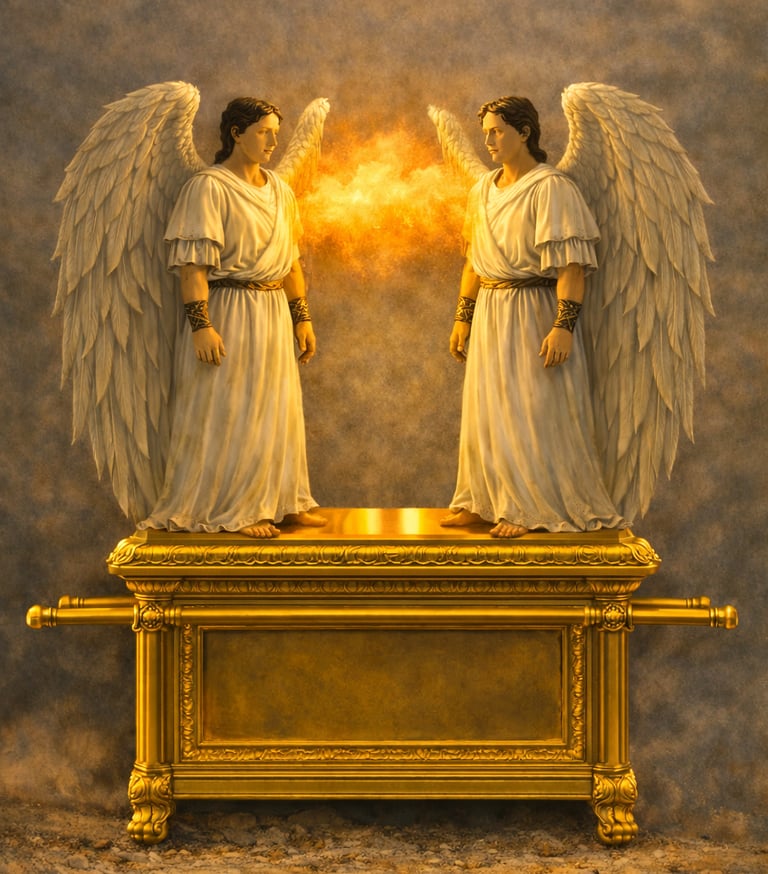
The Heavenly vision that Moshe recorded in written and oral form may be of benefit if it were diagramed out. The enclosure wall of the Garden has two cherubim to establish a barrier. Mankind, male and female, once dwelt with God inside that enclosure. Then separation occurred; that separation is death, defined as the removal from the Presence of God. Moshe saw the Heavenly reality, and the adage “as it is in heaven, so let it be on earth” comes into play. Once outside the Garden, the only key to return is to pass between the two Cherubim, which is why they were also placed atop the Ark, with the Kapporet between them. Only the death of the righteous opens that passage. The High Priest, both Aaronic and Malki‑Tzedec, stands as the shadow of the Heavenly High Priest, a pointer to that reality. Therefore, the righteous one must die so that T’shuvah may occur. We must turn around, for our path is to return to the Presence of God and walk with Him again. And here is the inversion: to undo this death, we must pass back through this death, back to the other side. The very separation that expelled us must be traversed in reverse. That is why the High Priest is necessary for all of us, so this can be inverted. Only He can approach the Kapporet with His own blood. Only He can cross the boundary that death created. Only He can turn back what only death can do. What Yeshua said and did, and what the disciples accounted, was not the birth of a new religion. It was the High Priest stepping into His office, the Anointed One doing what only He could do. Every act, every word, every appointed moment was in accord with what Moshe and the Prophets said would come to pass. Nothing was improvised. Nothing was novel. It was the Heavenly plan unfolding on earth. This is the very thing Moshe saw, the Heavenly pattern, the architecture of redemption revealed on the mountain. And this is why Yeshua met with Moshe and Eliyahu in the garden: the Witness of the Torah and the Witness of the Prophets standing with the One who fulfills both. The earthly and the heavenly converged in that moment, not to begin something new, but to reveal what had been true from the beginning. Yeshua did not create a religion; He enacted the Heavenly priesthood. He walked the path Moshe saw, the path the Prophets proclaimed, the path the High Priest foreshadowed. He came to do what He had to do, to pass through death, to open the way between the Cherubim, to restore the path back into the Presence. This is not innovation. This is fulfillment. This is the Tavnit (pattern) made flesh.
The Pattern was never broken; it was waiting for Him.
Before exile, before the Cherubim turned their flaming
gaze, before death sealed the gate, the Pattern already
held the shape of the One who would come. Every
boundary, every shadow, every priestly act whispered
His name. The Garden’s enclosure, the guardians, the
Kapporet, the blood, the High Priest, none of it fractured,
none of it lost. It all stood in stillness, poised for the
moment when the true High Priest would step into the
story. He did not repair a broken system; He activated
the design. He walked the ancient path, passed through
death, opened the way between the Cherubim, and
fulfilled the Heavenly pattern Moshe saw on the
mountain. The Pattern was never waiting for us to fix it,
it was waiting for Him to walk it. This is what Israel, its priesthood, its sacrifices, its Tabernacle, everything Moshe wrote, was and is meant to do and say for the world: to point, with relentless precision, to the One the Most High had always been revealing. Every altar, every boundary, every offering, every priestly garment, every chamber of the sanctuary was and remains a declaration in advance. Israel’s entire architecture of worship stood, and still stands, as the living witness that the Pattern was never broken; it was waiting for Him.
From the Garden to the Sanctuary, the Pattern stood in place, unaltered, unbroken, awaiting the One who alone could walk its ancient path and open the way between the Cherubim. Israel’s generations lifted their prayers for God Himself to atone for them, and in the fullness of time He answered not by proxy, not by symbol, but in person: the Anointed One, stepping into the very Pattern that had always spoken of Him.


Faith
Nature
contact@tishrei15.com
© 2025. All rights reserved.