Announcing that the great day of the lord is nearer than you think. O Come let us adore him - Luke 2:13
Ring H
6-13
First Fruits of the Barley Harvest
The Seventeenth Day of Nisan
Yom HaBikkurim
Three days and nights after Passover (17 - 14 = 3 days) and this was on Shabbat.
For the Orthodox or Rabbinic stream, the First Fruit of the Barley Harvest is acknowledged, yet in practice it never appears in their lived festival cycle. Chabad’s own calendar steps over it entirely, moving from the so‑called “Second Passover” straight to Lag B’Omer, inserting two days of their own making between Passover and Shavuot while the Torah‑commanded day disappears (Lev 23:9–14). And honestly, “Second Passover” sounds more like the Hobbits’ second breakfast than a Torah‑anchored moed, appointed time. The irony is sharp: the day Scripture elevates, they step over; the days Scripture never names, they elevate. So much for D’var Torah. Once again the mesorah rises to overrule the written Word, replacing the rhythm God set in His moedim with the rhythm men preferred.
Part of the reason this took root is what happened after the destruction of the Temple. With the altar gone and the priesthood scattered, Rabbinic Judaism filled the void with interpretation, layer upon layer, because what could no longer be done had to be redefined. The mesorah expanded to cover the silence left by the missing altar, and in that expansion, additions became normal. And once that machinery was in motion, the necessary comment precluded turning back to what YHWH had said all along. Admitting they were wrong was not an option.
For Christendom, the First Fruits of the Barley Harvest became a “Jewish thing,” barely worth a mention. The church long ago decided that the Julian calendar was preferable to “that Jewish one,” as though the people of God were detestable and Rome itself divine. God, apparently, was a Roman. And when Constantinople rose, it too was declared holy, two imperial capitals crowned with sanctity while the calendar of YHWH was quietly dismissed. The western liturgy then stepped forward and superseded whatever God allegedly told Moshe. The calendar had to be rebranded, the moedim overwritten, and the rhythm of empire enthroned where the rhythm of heaven once stood.
Aside from the ex cathedra declarations, Christendom built its own mesorah, machinery that dictated meaning, overrode the plain text, and established rules by authority rather than Scripture. The councils forged creeds and canons; the Fathers became the approved interpreters; canon law hardened into a ruling system; the liturgy rewrote the calendar; and the magisterium, armed with imperial sanction, declared what the text “must” mean. Different garments, same function: a tradition lifted above the Word, speaking where Scripture was silent and silencing where Scripture spoke.
In response to both camps, it falls to the Messianic world to step forward and proclaim that the D’var Torah stands, all of it. The only functional, practical way to understand and keep His Word is to declare that Yeshua arose and confirmed the High Holy Days, even Yom HaBikkurim, as a real and present day. His ascent to the Father on the First Fruits of the Barley Harvest (John 20:17; 1 Cor 15:20–23) is the validation: the true One of the flock, the Lamb offered on this appointed day, fulfilling in His own body what the shadow projected. The heavenly reality breaks through the earthly pattern, and the moed is restored to its meaning. That our Messiah is our First Fruits, just as Shaul proclaimed to Corinth two thousand years ago. Imagine a Hebraic message to a Greek city, what would it have sounded like? Probably what this message sounds like now to the reader of this brochure.
We are not here to start a new religion. We are here to proclaim that we live by every word YHWH has spoken, including Moshe, for Matthew 4:4 is a direct citation of Deuteronomy 8:3. Israel lifts the first barley, the omer cut at dawn, waved before YHWH (Lev 23:10–11). The priest lifts the lamb, one male, one year, without blemish, wholly ascending (Lev 23:12). Flour and oil rise as tribute, the work of human hands returned (Lev 23:13a). Wine is poured like joy returning to the earth, the libation emptied at the altar’s base (Lev 23:13b). Four offerings, one declaration: the year belongs to YHWH; no new grain tasted until His portion rises first (Lev 23:14).
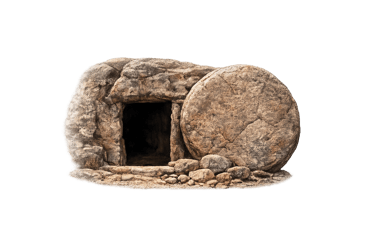
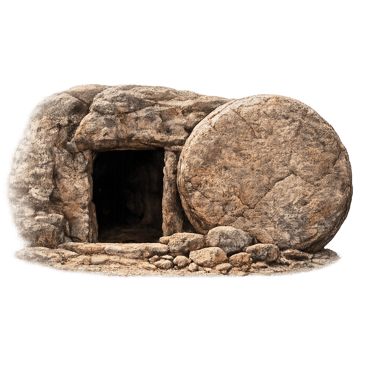
Note the pattern: just as Pesach required one male from the flock (Ex 12:3–6), so this day requires one male again. Two mornings. Two ascents. Two singular offerings rising to God. And all of it lands on Nisan 17, the day never chained to a weekday, the day marked only by the calendar God Himself set. The day when “three days and three nights” resolve (Matt 12:40), when the sealed tomb must yield to prophecy. And in the year of Yeshua’s crucifixion and resurrection, this ascent fell on Shabbat, the Firstfruits rising inside the Rest, the Lamb lifted on the day the barley rose, the third day answering the third day.
This is what made it possible for the women to come on Nisan 18, the first day of the week in that year, and the first lawful moment their feet could move (Mark 16:1–2; Luke 24:1). For the whole weight of Nisan 17 lay locked inside Shabbat and Firstfruits, the Lamb’s ascent unfolding in silence, the third‑day prophecy standing upright while the world slept. Only when that day closed, only when the boundary of rest gave way to dawn, could two women rise, take their spices, and walk toward the tomb, unaware that the stone had already yielded, unaware that the Firstborn had already stepped into the new creation.
When you see this day occurring according to YHWH’s own calendar, the true context and value of what happened finally stands upright. The narrative explains itself because it unfolded according to the Word of YHWH, not the inventions of later men. This was never a validation of the western liturgical calendar, which did not yet exist. It was God keeping His appointed time exactly as He declared when He established His moedim, appointed times. The story aligns because the Author kept His schedule.




Faith
Nature
contact@tishrei15.com
© 2025. All rights reserved.