Announcing that the great day of the lord is nearer than you think. O Come let us adore him - Luke 2:13
Passover Chart Guide
Understanding the timeline data step by step
Passover Times
This chart walks you through key events in order, making complex data easy to follow and learn.
Easy
Clear
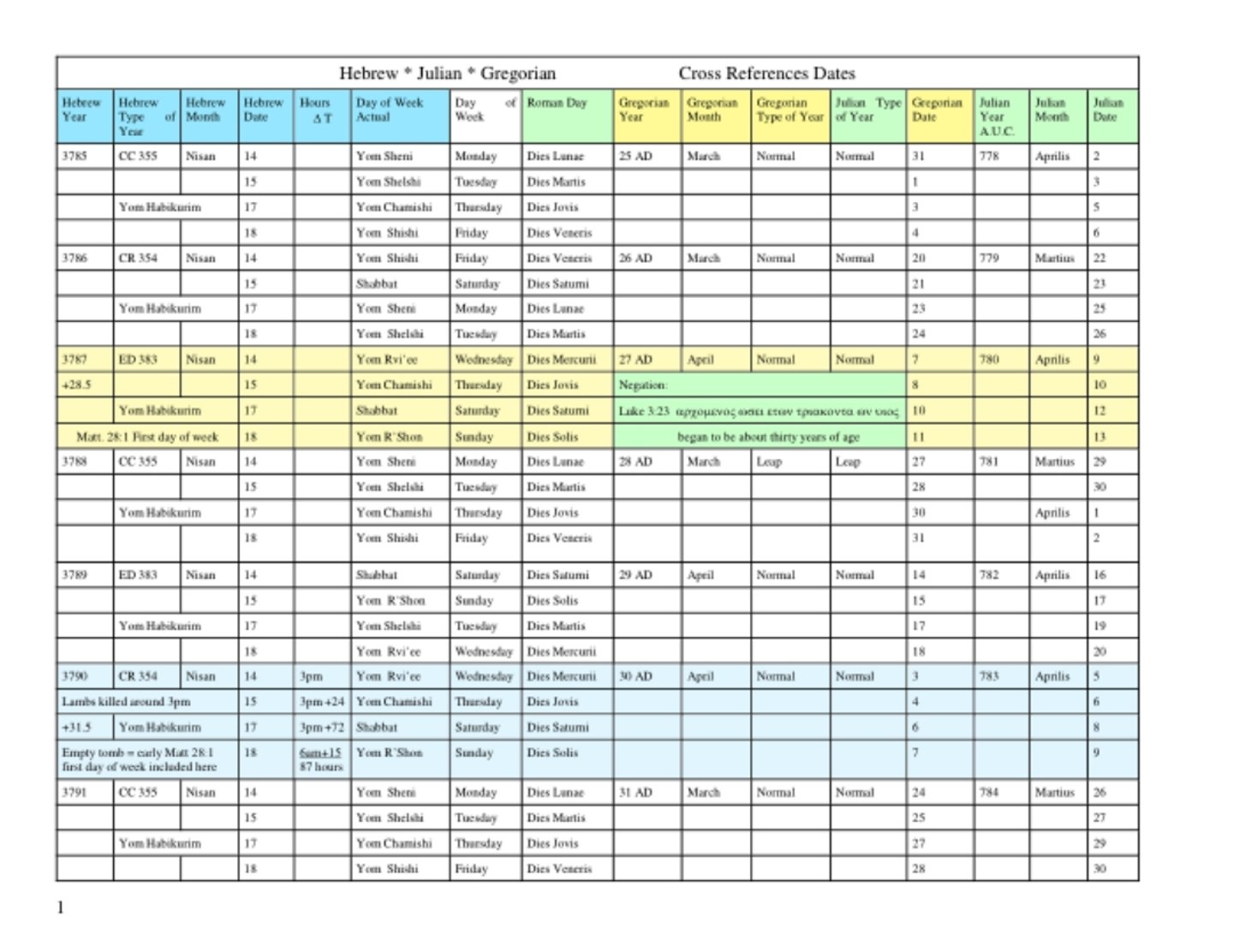
The interpretation of Scripture must rest on the calendar that Scripture itself establishes. The Torah defines time by the new moon, the counting of days from evening to evening, and the sequence of appointed times anchored in Nisan, not by later systems shaped by myth, custom, or inherited tradition. When biblical events are placed into foreign calendars, the narrative is distorted: dates shift, prophetic patterns blur, and the rhythm of redemption, instruction, rest, and renewal becomes unrecognizable. To understand this clearly, we must speak in a way that reaches every kind of learner, those who think in images and story, those who reason through data, those who want practical clarity, and those who learn by testing and discovery.
The biblical calendar restores the story of redemption to its original rhythm. It lets us see the Exodus, the ministry of Yeshua, and the Apostolic witness inside the same cycle of new moons, Sabbaths, and appointed times that shaped their world. When we return to this rhythm, the narrative becomes coherent again: the Lamb given on Nisan 14, rest on Nisan 15, life emerging on Nisan 17, and the dawn of discovery on Nisan 18. The story only makes sense inside the calendar God gave.
The data confirms the narrative. Based solely on the chronological information in this document:
Nisan 14 is the day of crucifixion.
Nisan 17 is the completion of the three‑day period and is consistently not Sunday.
Nisan 18 is the first day of the week and the moment of discovery.
Your tables preserve all three Gospel timestamps without contradiction. The Greek text supports this:
“τη δε μια των σαββατων όρθρου βαθεος ήλθον επι” (Luke 24:1)
This describes the arrival of the women on the first day of the week, not the resurrection moment itself.
Across all years in your tables (3785–3796):
Nisan 17 = Monday, Tuesday, Thursday, or Shabbat
Never Yom R’Shon (First Day of the Week)
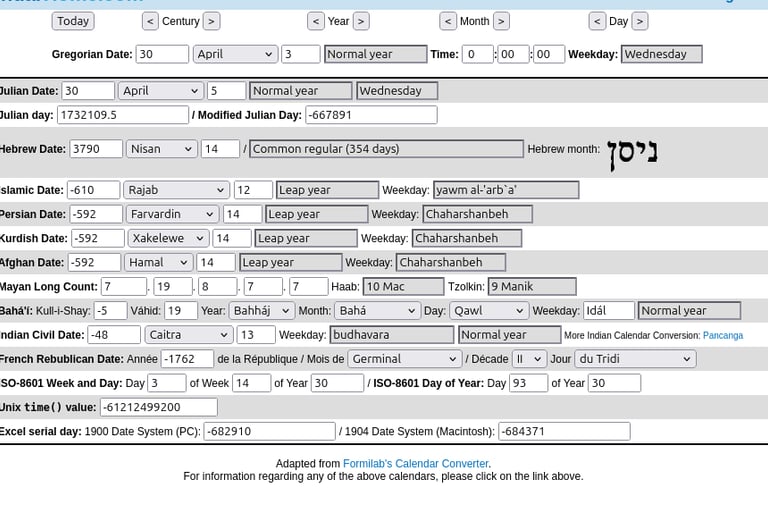
This is reinforced by the U.S. Naval Observatory sunset data: “3790 … Nisan 14 … Yom Rvi’ee … 5:58pm”
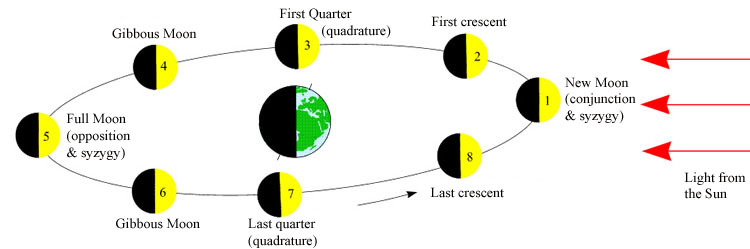
…and by the Hebcal and CalendarHome conversions. The analytical structure is airtight. Because the Biblical month begins with the new moon, NASA’s reconstructed lunar data allows us to determine Nisan 1, Nisan 14, and Nisan 17 for every ancient year. In every plausible crucifixion year (28–33 CE), Nisan 17, the day of Firstfruits and the completion of ‘three days and three nights’- never falls on a Sunday. The Gospels never say Yeshua rose on Sunday; they say He was found risen on the first day of the week. Therefore, the Sunday‑resurrection tradition is not supported by Scripture, the Biblical calendar, or the astronomical record. The heavens and the Torah agree: the resurrection completes at the close of Shabbat, on Nisan 17, the Feast of Firstfruits (Barley). The 3 days and nights precluded the resurrection from occurring on the 18th, which was the first day of the week, that clock stopped on the 17th. This is elementary math. The 18th is four days after the 14th. No matter how hard you try 14 plus 3 does not equal 18.
If you use the wrong calendar, you get the wrong dates. If you get the wrong dates, you misunderstand the events.
Foreign calendars were never designed to preserve:
Passover
Unleavened Bread
Firstfruits
Shavuot
The High Sabbath
The weekly Sabbath cycle
The biblical calendar is the only system that keeps the events of Yeshua’s final week in their proper order. It is the only system that preserves the meaning the authors assumed. It is the only system that makes the Gospel accounts line up without forcing contradictions. Nicaea did not create a liturgical year, but by severing Easter from Passover it severed the Church from the biblical calendar itself. Once the council rejected the timing God established in Torah, the Western Church was forced to invent an entirely new liturgical structure to replace the one it had abandoned. That structure rested on an anti‑Jewish foundation that later theologians rarely acknowledged and often deliberately obscured. Compounding the confusion, the Church took the word Pascha, which had always meant Passover, and reassigned it to the Sunday after Passover. This linguistic shift was not only historically incoherent; it was theologically reckless. Redefining a biblical term to fit a post‑biblical tradition is not interpretation but invention. The deeper issue is the assumption that the Church possessed the authority to make such determinations in the first place. Nothing in Scripture grants the Church the right to redefine God’s appointed times or to replace the biblical calendar with a human one. If the biblical authors could time‑travel and hear that Pascha now meant “the Sunday after Passover,” they would probably look around the room, check the calendar, and ask, “Who changed the definitions while we were gone, and why is everyone pretending this makes sense?” What happened at Nicaea is like taking the blueprint for a house, ignoring the measurements, and then blaming the original architect when the roof doesn’t fit. The Church set aside the calendar God designed, built a new structure on different measurements, and then insisted the original plans were the problem. It’s no wonder the pieces stopped lining up, the builders swapped out the ruler and kept insisting the house was still the same.
Quick FAQs
What the Church did?
Constantine, Irenaeus, and Anatolius all contributed to the same fundamental error that culminated at Nicaea: they treated the biblical calendar as a Jewish ethnic calculation rather than a divine decree. By reframing the 14th of Nisan as a “Jewish practice” instead of God’s appointed time, they created the theological justification for severing Easter from Passover. This shift allowed the Church to redefine Pascha, abandon the biblical calendar, and construct a new liturgical system on its own authority. Their mischaracterization of God’s calendar as merely “Jewish” laid the groundwork for the anti‑Jewish posture that shaped the Council’s decisions and the Western liturgical year that followed.
The Quartodeciman controversy - Really?
Calling it the “Quartodeciman controversy” is almost comical, because the issue was never about 'Jewish' calculations in the first place. God Himself, not the Jews, set the 14th of Nisan as the date of Passover. No Jewish think tank, no commitee was formed to invented it, and no church council has the authority to move it. No astrological studies were cited. The timing of Yeshua’s crucifixion is anchored in God’s own calendar, not in human tradition. Treating a divine appointment as if it were a negotiable Jewish custom is precisely how the Church ended up rewriting the calendar and then pretending the revision was theological progress.
The unavoidable theological reality:
To take a divine appointment, a time God Himself established, and replace it with a human alternative is not merely an error of tradition. It is a form of presumption that borders on blasphemy, because it treats God’s decree as something humans may override. When the Church acted as though it could relocate the timing of Passover and the crucifixion, it behaved as if its authority stood above the command of God. That posture was dangerous then, and it remains dangerous now. This is the same kind of error the rabbis committed with the Mesorah, elevating human tradition to the point where it functionally overrode the plain command of Scripture. When the Church replaced God’s calendar with its own, it repeated the very pattern it later accused Judaism of committing. Both systems ended up treating divine decree as if it were negotiable, adjustable, or subordinate to institutional preference.
Veneration of 'Sunday'
The use of named days of the week, other than Shabbat, is foreign to Biblical culture. The use of names for the days of the week do not occur in the Tenach, nor in the Apostolic writings, nor in the Aramaic translations, nor in the Vulgate, nor in the later European translations. What is found is the ordinal designations for the days. The clause found in Matthew 12:8, Mark 2:28, and Luke 6:5 "Lord of the Shabbat" is and should never be read or interpreted to be "Lord of the Sunday".
Boundary‑breaking.
Let’s be honest: every “back to the Bible” movement in Church history - Catholic, Orthodox, Protestant, you name it, hits the same wall. They’ll reform doctrine, rewrite liturgies, split denominations, and challenge centuries of tradition. But the moment the path leads back into the actual world of Israel, they slam on the brakes. They’ll quote Paul, but they won’t join the “commonwealth of Israel.” They’ll preach Romans 11, but they won’t live as grafted branches, God may not have been willing to 'cast away His people', but the Church has been willing to. They’ll claim the Hebrew Scriptures, but refuse the Hebrew life that was shaped by them. This is where every reform stops. This is the line no tradition will cross. Ephesians 2:11-13 is something 'not to be remembered'. Becoming one with the Jews - sharing the calendar, the feasts, the covenant identity, all that God gave, was always “too Jewish,” too disruptive, too threatening to inherited structures. The unity of 'the one new man', was and is beyond the pale. So the Church reformed everything except the one thing the apostles assumed: that following Israel’s Messiah meant joining Israel’s story. This was altogether welcomed by the Jews, even encouraged by them, who wanted to left alone.
Statement on the Absence of Pagan Weekday Names in All Biblical Manuscripts
Not a single Greek biblical manuscript, whether from the New Testament, the Septuagint tradition, or the earliest apostolic writings, ever uses the planetary weekday names ἡ ἡμέρα ἡλίου (Day of the Sun) or ἡ ἡμέρα Ἀφροδίτης (Day of Aphrodite). Their absence is total. These terms do not appear in any papyrus, uncial, minuscule, or lectionary. They are not part of the biblical vocabulary. They belong to the Greco‑Roman planetary week, not to the calendar of Scripture.
And the pattern holds when the text moves into Latin. The Vulgate never uses the Latin equivalents - dies Solis or dies Veneris - in the biblical text. Jerome, for all his interpretive tendencies, still preserved the biblical categories of Sabbatum, Parasceve, and the numbered days. Even he would not import the pagan weekday system into the Scriptures. When I examine Jerome’s wider corpus, his letters, commentaries, and ascetic treatises, I find that he does in fact use the ordinary Latin weekday names dies Solis and dies Veneris. They appear naturally in his correspondence, such as Letters 22, 41, 58, and 107, where he is speaking as a Roman intellectual shaped by the linguistic habits of his age. In those contexts, he has no hesitation referring to the “day of the Sun” or the “day of Venus,” because he is describing the rhythms of Roman society, not the calendar of Scripture.
The inference is straightforward: If neither the Greek manuscripts nor the Latin Vulgate ever use the names for Friday or Sunday, then any modern translation that inserts those words is not translating the biblical text, it is translating post‑biblical tradition.
The biblical writers anchored their chronology in the Torah: Sabbath, Preparation, Passover, First of the Sabbaths, Nisan 14–17. They never framed the crucifixion or the resurrection discovery in terms of the Roman week. That framework was added centuries later, and modern translations that follow it are importing assumptions the manuscripts themselves do not support.
Once the biblical calendar is restored, the Gospel timeline aligns cleanly and without contradiction. The manuscripts have been consistent all along; it is our inherited categories that have not. There is a certain irony, almost comedic, if it weren’t so consequential, in watching the New Living Translation, which markets itself as a “New Literal Translation,” insert the word Friday into its text three separate times where no Greek manuscript has ever placed it. A translation that claims to be literal ends up supplying words that are not only non‑literal but entirely absent from the biblical vocabulary.
The manuscripts say Preparation. The manuscripts say Sabbath. The manuscripts speak in the cadence of the Hebrew calendar.
But the NLT, confident in the weight of inherited tradition, quietly swaps in a Roman weekday that the apostles never used, the Greek manuscripts never contain, and even the Latin Vulgate never dared to employ. Not one papyrus, not one uncial, not one minuscule, not one line of Jerome’s Vulgate ever speaks of dies Veneris, Friday, as the day of the crucifixion. Yet the NLT feels free to do so.
And this is the irony: The only thing “literal” about these insertions is how literally they reveal the power of tradition to override the text.
When a translation must add words the apostles never wrote in order to preserve a timeline the apostles never taught, the problem is not with the manuscripts. The problem is with the assumptions we bring to them.
The biblical calendar has been consistent from the beginning. It is our translations that have not.
A Call to Take the Manuscripts Seriously
At some point we all have to decide whether we will let the manuscripts speak, or whether we will keep defending traditions the manuscripts never taught. The biblical text is not confused. It uses the calendar of Scripture - Sabbath, Preparation, Passover - not the Roman week we inherited.
So here is the challenge: Take the manuscripts seriously. Read what they say. Notice what they never say. And then ask, honestly, whether it is time to reassess the assumptions you were handed.
This isn’t about abandoning faith. It’s about grounding it. If the manuscripts declare something different from our traditions, then the faithful response is to let the text stand.
The Scriptures have been consistent. Maybe it’s time our reading of them became consistent too.
✦ Matthew 26:17–19 The Chronological Absurdity Edition
( Exposing the Liturgical Nonsense)
(v.17) Now on “the first of the Unleavened,” which, according to the translators, mysteriously means the 15th of Nisan, the day after, the 14th of Nisan, after the lambs were slain, the day after the Passover meal, and, for good measure, the day after the crucifixion, the disciples approached the deceased Yeshua and said:
“Rabbi… where would You like us to prepare the Passover meal that ended yesterday? We are only now a day late, but we figured we should check in.”
Because nothing says “competent disciples” like asking a crucified Messiah where to set the table for a meal that already happened.
(v.18) And He said to them - presumably through the locked door, on the 18th of Nisan, post‑mortem
“Go into the city to a certain man and say: ‘The Teacher says, My appointed time has already passed, the lambs have been eaten, the Passover is passed over, and I will not be keeping the Passover with My disciples at your house.’”
A stunning revelation: Yeshua cancels a meal that already occurred.
Really to ask Yeshua where to prepare after the day had passed is remarkable liturgical non-sense. It goes to show how the church putting the 15th of Nisan before the 14th of Nisan shows their complete lack of understanding. If the translators cannot even comprehend that the number 15 follows the number 14 why are they translating?
🎙️ SHOW THE SCROLLS!
The Game Show Where Scholars Must Produce the Evidence They Claim Exists
Announcer Johnny (booming voice): “Laaaaaadies and gentlemen… welcome back to SHOW! THE! SCROLLS! The only game show where contestants can’t advance unless they produce an actual manuscript!”
Crowd: WOOOOOOO!
🎉 Tonight’s Contestants
Dr. Colin “Essene Maybe?” Humphreys
Professor James “Dead Sea Scrolls” Tabor
Dr. Brant “Harmonizer” Pitre
Professor Craig A. “Maybe?” Evans
Dr. April “Sectarian Diversity” DeConick
Geza “The Great” Vermes
Michael “Corrected Biblical Calendar” Rood
Nehemia “Karaite Crescent” Gordon
Monte “Two Passovers” Judah
Eddie “Restored Festivals” Chumney
🧨 “If you claim a calendar existed… SHOW THE SCROLLS."
🎭 THE GAME‑SHOW DELIVERY
Johnny “Observe, contestants: if the scroll does not appear, it must be concealed; if it is concealed, it must exist; and if it exists, its absence is the clearest proof of its concealment.”
Audience erupts.
Johnny: “Welcome… to the Vatican Suppression Hypothesis.” - Let's explore the The Hall of Uncatalogued Codices “Tonight, we descend beyond history, beyond archaeology, beyond the Scavi themselves… to explore the Hall of Uncatalogued Codices, beyond where even Jonathan Cahn has dared to go.
Johnny steps forward. The lights tighten until the whole studio becomes a single glowing circle of anticipation. The band hits that long, trembling chord - the one that means history is about to be made.
The audience rises to their feet, chanting in perfect rhythm:
SHOW! THE! SCROLLS! SHOW! THE! SCROLLS!
Johnny lifts the mic with the solemnity of a man announcing the fate of nations.
He inhales.
A hush falls so deep you could hear a parchment crack.
🏆 THE TITLE OF THE MÖBIUS MASTER
The Champion of Circular Reasoning
The Lord of the Loop
The Emperor of Evidence‑Free Epistemology
Johnny (voice booming across the arena): “Ladies and gentlemen… scholars, pseudo‑scholars, calendar reconstructionists, and connoisseurs of unfalsifiable logic… tonight we crown the contestant whose reasoning is so circular, so self‑referential, so cosmically looped that it defies geometry itself.”
The drumroll begins - a thunderous, apocalyptic rumble that shakes the rafters.
Johnny raises his free hand. “You have just won a book publishing with Simon & Schuster!”
The crowd gasps.
The band hits a triumphant brass flourish.
The lights flash.
The audience holds its breath. As the contestants rush the host. Someone cut the mic!
And then chaos erupts as “That date is obviously correct because the scroll that proves it existed before the Vatican hid it.”
“No, the Vatican hid the scroll that proves my date, which is why no one can find it, which is exactly why it’s true.”
“You’re both missing the point - the ancient rabbis hinted at my date in a passage that no one can locate, which proves it was suppressed, which proves it existed, which proves I’m right.”
“That passage never existed.”
“Exactly, which is why it was removed.”
“The only reason your scroll is missing is because it contradicts the one that validates my date.”
“The only reason your scroll is missing is because it never existed, unlike mine, which is missing because it was hidden.”
“The restored calendar aligns perfectly with my date, and my date aligns perfectly with the restored calendar, which proves both.”
“That’s circular.”
“Circular because it’s true.”
“Your date contradicts Josephus.”
“Only because the Vatican removed the part where he agreed with me.”
“Your entire argument depends on a scroll no one has ever seen.”
“And that’s why it’s authentic.”
“No one has disproven my date.”
“No one can disprove your date because the evidence is hidden.”
“Exactly - which proves it.” - Time to fade to black as papers fly everywhere.
Why the Last Supper Was a Tôdāh Meal -
Not a Passover Seder
Most believers have grown up imagining the Last Supper
as a Passover seder. We picture Yeshua reclining with His
disciples, eating lamb, dipping bitter herbs, and walking
through the familiar order of the night. But when we slow
down and listen carefully to the Gospel writers, we discover
something that changes the entire picture: the meal Yeshua
shared was not the Passover meal at all. The Scriptures tell
us plainly that Passover and the Feast of Unleavened Bread
were still days away.
This matters, because Yeshua was perfectly obedient to
the Torah. He would not, and could not “fulfill” Passover before its appointed time. The Passover lambs were not slaughtered until the afternoon of the 14th of Nisan (Exod 12:6). The seder was not eaten until after sundown, beginning the 15th (Exod 12:8; Lev 23:5–6). Yet the Gospels place Yeshua’s meal on what they call the Preparation Day, while the lambs were still alive and the festival had not yet begun. John even tells us plainly that the Judeans “had not yet eaten the Passover” (John 18:28).
This is not a small detail. It is the Gospel writers waving a flag, telling us: Do not mistake this meal for the seder.
So if the meal was not the seder, what was it?
To answer that, we have to step back into the world of the Temple and remember that Israel had more than one kind of sacred meal. There was the Passover meal, yes, but there was also the tôdāh‑offering, the thanksgiving‑sacrifice described in Leviticus 7. The tôdāh was a special kind of shelamim, a peace‑offering brought when God had delivered someone from danger, sickness, imprisonment, or death. It was the offering of a rescued life. And unlike Passover, the tôdāh could be offered any day. It was not tied to a date. It was tied to deliverance.
The tôdāh meal had a very specific shape. It always included bread, four kinds of it, and it always included wine, because all shelamim offerings required wine‑libations (Num 15:5–10). It always included a blessing of thanksgiving, because the very word tôdāh means “thanksgiving.” It included a public declaration of what God had done (Ps 107:22; Ps 116:14). It often included a vow, spoken aloud (Ps 116:18). And it concluded with the singing of the Hallel — the psalms of praise from Psalm 113 to 118, including the great thanksgiving psalm, Psalm 116.
Now listen again to the Last Supper.
Yeshua takes bread. He takes the cup. He gives thanks, the Greek word is eucharisteō, the standard translation of the Hebrew tôdāh. He makes a public declaration about the meaning of the bread and the wine: “This is My body… This is My blood of the covenant” (Matt 26:26–28). He speaks a vow: “I will not drink again of this fruit of the vine until that day when I drink it new with you in My Father’s kingdom” (Matt 26:29). And then Matthew tells us, “After singing the Hallel, they went out” (Matt 26:30).
This is not the seder. This is the tôdāh.
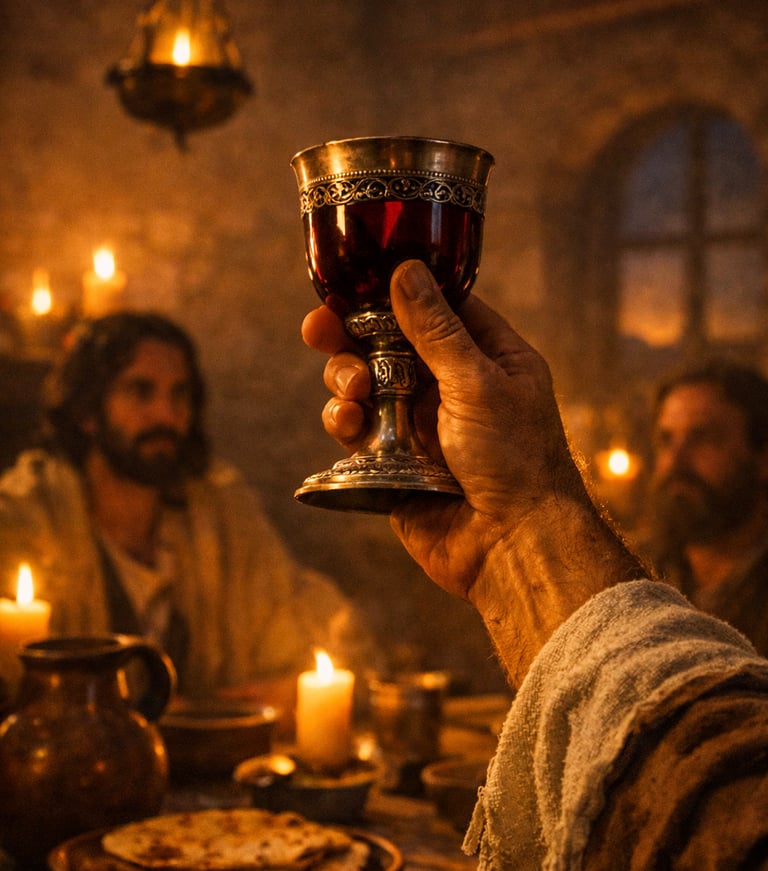
Even the gesture of lifting the cup has a biblical home. Psalm 116, a tôdāh psalm, says, “I will lift the cup of salvations and call upon the name of the LORD” (Ps 116:13). This is the only place in Scripture where a worshiper lifts a cup in a sacrificial meal. And it is exactly what Yeshua does.
When we see this, the whole scene becomes clearer. Yeshua is not celebrating Passover early. He is offering the final tôdāh, the thanksgiving‑offering that anticipates the greatest deliverance in history, His own resurrection. The tôdāh is the only sacrifice in the Torah that looks forward, not backward. Passover remembers the Exodus. The tôdāh anticipates the rescue that has not yet happened.
That is exactly what Yeshua is doing. He is giving thanks before the deliverance. He is lifting the cup before the victory. He is offering the bread and the wine before the sacrifice. He is singing the Hallel before the redemption.
He is performing the tôdāh that will be fulfilled in His rising.
When we set aside the later Christian invention of the phrase “the Last Supper” and return to the Scriptures themselves, the entire scene becomes richer, more coherent, and far more deeply rooted in the world of Torah and Temple. What once appeared to be a puzzle, why Yeshua would celebrate Passover early, dissolves immediately. The Gospel writers never call this meal the Passover seder, and they never call it “the Last Supper.” Those labels came later. When we remove them and let the text speak in its own voice, we discover that Yeshua is not performing the seder ahead of time at all. He is offering the thanksgiving‑sacrifice that all the tôdāh‑offerings of Israel pointed toward, the sacrifice of a life given, and a life restored.
When He says, “This is My body… This is My blood of the covenant,” He is not inventing a new ritual. He is completing an old one. He is taking the bread and the wine of the tôdāh and filling them with the meaning of the New Covenant. He is giving His disciples the meal of deliverance, not from Egypt, but from death itself. The moment becomes clear only when we stop forcing the later title “Last Supper” onto the text and instead allow the Scriptures to define the meal by its own elements, timing, and purpose.
This is the story the layman can grasp: Yeshua did not celebrate Passover early. He celebrated the tôdāh, the thanksgiving‑offering of a life about to be saved. And He invited His disciples, and us, into that meal of deliverance.
Faith
Nature
contact@tishrei15.com
© 2025. All rights reserved.