Announcing that the great day of the lord is nearer than you think. O Come let us adore him - Luke 2:13
Ring
11-13
סֻכּוֹת
Birth of the Messiah
Sukkot
Feast of Tabernacles
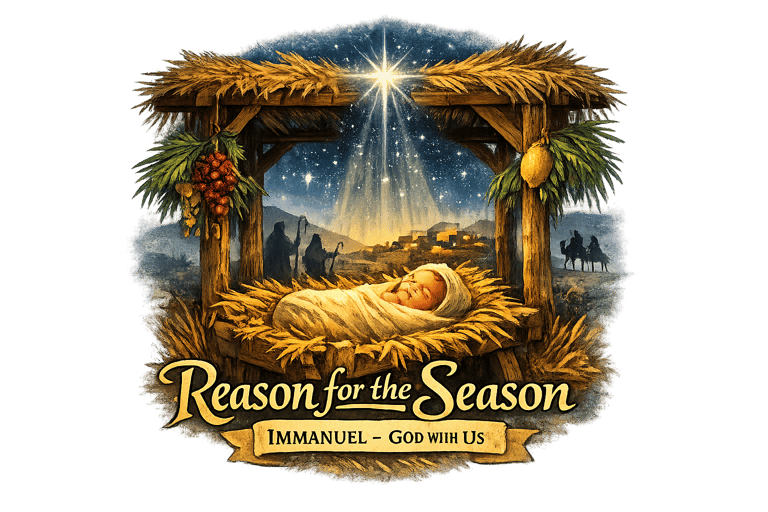
Yeshua's Birth has a story you were never told.
The 15th Day of the month of Tishrei / HaEtanim
Sukkot is not a relic. It is a revelation. It is the moment in the calendar where God Himself interrupts our routines and says, “Step out of what you built, and remember Who shelters you.
For seven days, Israel was commanded to leave the security of stone walls and sit beneath branches, shadows, and starlight (Leviticus 23:39–43). That command was not quaint. It was not cultural. It was not optional. It was instructional architecture, a living parable designed by God to confront the human heart.
Sukkot exposes the truth we try to forget: We are temporary. He is permanent. We are fragile. He is faithful. We are wanderers. He is the shelter.
And this is why we must take it seriously now.
Sukkot is the moed, the appointed time, where God teaches us through structure, rhythm, and embodiment. He commands us to rejoice (Deuteronomy 16:14–15), to gather, to remember, to see. These are not suggestions. They are covenant disciplines meant to shape a people who know how to live under God’s covering.
And the seriousness only deepens when we see how Sukkot rises to meet Messiah.
John does not say the Word “dwelt” among us. He says the Word tabernacled among us (John 1:14). Isaiah does not say God would be near us. He says He would be with us, Emmanu‑El (Isaiah 7:14).
The incarnation is not an isolated miracle. It is the fulfillment of the very pattern God embedded into Sukkot from the beginning.
This is why the 15th day of the seventh month, the day of dwelling, light, joy, and appearing, fits His birth with such precision. Not sentiment. Not symbolism. Design. The feast explains the Child. The architecture explains the incarnation.
So how does this affect us now?
It calls us back. Back to the calendar God set in the heavens (Genesis 1:14). Back to the rhythms He established. Back to the humility of dwelling under His covering. Back to the joy He commands. Back to the seriousness of a God who keeps His appointments, and expects His people to honor them.
Sukkot is not merely something Israel once did. It is something God still means. It is a feast that still forms. It is a moed that still speaks. It is a reminder that the God who tabernacled once will tabernacle again.
And if we take that seriously, it changes how we live now, with less fear, with more gratitude, with deeper awareness, and with the steady conviction that God is still the shelter.
This moed does not stand alone. Sukkot is directly bound to Shavuot by the very sequence God embedded into Israel’s priestly service. The story begins not in Bethlehem, but in the Temple, in the days when Zachariyah, the father of the forerunner, completed his appointed duty.
Zachariyah served during the Mishmarot, the priestly rotations established in the days of David (1 Chronicles 24). And the rotation assigned to him was Aviyah (Abijah). Immediately following Aviyah came the next course - Yeshua. Taken together, these two names form a declaration written into the calendar itself:
Aviyah → “My Father is Yah.” Yeshua → “He Saves.” Declaring just who the Father of Yeshua is.
Placed side by side, the Mishmarot quietly proclaim: “Whose Father is God? Yeshua.” A priestly whisper embedded in the schedule long before the Child arrived.
When Zachariyah completed his service, a service that fell in the season of Shavuot, the feast of firstfruits and covenant renewal, he returned home, and Elisheva conceived the forerunner (Luke 1:23–24). Scripture then gives us the simplest and most decisive arithmetic in the Nativity narrative:
Six months later, the messenger Gabriel is sent to Miryam (Luke 1:26). Six months from Shavuot places the conception of Yeshua in the seventh month, the month of Ha’Etanim, later called Tishrei.
Add to that the ordinary, God‑designed rhythm of pregnancy, and the birth arrives precisely on the 15th day of Ha’Etanim, the opening day of Sukkot, the Feast of Tabernacles.
No strain. No forcing. No contortion. Just the calendar doing what God designed it to do.
This is not coincidence. This is not irony. This is identity.
Sukkot is the feast of dwelling, the feast of God with us, the feast where Israel sits beneath branches and sky to remember that He is the shelter (Leviticus 23:39–43). And on that very day, the day appointed for dwelling - the Word became flesh and tabernacled among us (John 1:14).
The moed explains the Messiah. The Mishmarot confirm the timing. The calendar reveals the architecture. And the incarnation fulfills the pattern.


Faith
Nature
contact@tishrei15.com
© 2025. All rights reserved.