Announcing that the great day of the lord is nearer than you think. O Come let us adore him - Luke 2:13
Ring F
2-13
שַׁבַּת
Shabbat
Shabbat: The Breath Before the Fall
I. Before Sinai, Before the Fall
In the beginning, before covenant, before command, before the first human ever drew breath, there was a day that God Himself blessed. Not a mountain. Not an altar. Not a chosen people. A day. On the seventh day, God shavat - He ceased (Genesis 2:2–3). He blessed the day. He sanctified it. He set it apart as the world’s first holy thing. Shabbat is not born from law; it is born from God’s own rest. It is the rhythm of creation’s lungs, the world inhaling and exhaling in the presence of its Maker. Before sin fractured the world, Shabbat was the world’s breath. And humanity remembered this rhythm long before Israel ever stood at Sinai. Noah waits in seven‑day intervals for the dove to return (Genesis 7:4, 10; 8:10–12). Jacob “fulfills the week” when completing his marriage agreement (Genesis 29:27–28). Joseph mourns his father for seven days (Genesis 50:10). The seven‑day cycle is older than Abraham, older than Moses, older than Israel. Humanity remembers the rhythm even when it forgets the reason.
II. At Sinai: The Priestly Entrustment
When God forms Israel, He does not invent Shabbat - He entrusts it. Israel is called a kingdom of priests (Exodus 19:5–6). A priest does not exist for himself. A priest exists for others, to guard the holy, to mediate the unseen, to hold the pattern so the nations can find their way home. So God gives Israel the Shabbat as a sign (Exodus 31:13–17). Not because Shabbat belongs only to Israel, but because Israel belongs to the nations.
The logic is elegant:
Shabbat is universal in origin
Israel is priestly in calling
Therefore Israel bears the sign of the universal day
And even before the Ten Words are spoken, Shabbat reappears. In the wilderness of Sin, before Sinai’s fire, God commands the people to rest on the seventh day (Exodus 16:23–30). Israel is not learning something new — Israel is being re‑aligned to something ancient.
Then comes the second telling of the command, where Shabbat becomes the weekly abolition of Pharaoh. In Deuteronomy 5:12–15, the rest extends to:
sons
daughters
servants
foreigners
even animals
This is the Torah’s clearest declaration that Shabbat is for all humanity within Israel’s gates. Shabbat is the weekly proclamation that no human is a machine, no soul is owned by empire, no life is defined by output.
III. In the Prophets: The Nations Return
The prophets do not shrink Shabbat - they expand it. Isaiah sees foreigners who “join themselves to YHWH” and “keep the Sabbath” welcomed into God’s house (Isaiah 56:1–8). This is not an ethnic boundary. It is a creational invitation. And Isaiah’s final vision is even wider: “From one Sabbath to another, all flesh will come to worship before Me” (Isaiah 66:22–23). All flesh. All nations. All humanity. Shabbat is not abolished. It is universalized.
IV. In the New Covenant: Written on the Heart
The New Covenant does not discard Shabbat - it deepens it. Jeremiah declares that God will write His Torah on human hearts (Jeremiah 31:31–34). Not a new law. Not a Gentile‑adjusted law. His Torah, including the seventh‑day rhythm. Hebrews echoes the same truth: “There remains a Sabbath‑keeping for the people of God” (Hebrews 4:9). The writer ties this directly to:
God’s rest at creation (Genesis 2:2–3)
Israel’s wilderness unbelief
The future rest of God
Shabbat becomes the weekly rehearsal of the world‑to‑come, the seventh day whispering of the eighth. And Yeshua restores Shabbat to its original universal purpose: “The Sabbath was made for mankind” (Mark 2:27). Not “for Israel.” Not “for the Jews.” For mankind ἄνθρωπος humanity.
V. Shabbat for Humanity Today
Shabbat is not a relic. It is a rhythm, a sanctuary, a protest, a promise. It is the weekly refusal of Pharaoh’s economy (Deuteronomy 5:15). The weekly reminder that humanity is not owned by empire. The weekly declaration that we are not machines, not commodities, not units of production. To keep Shabbat is to align with the world as God made it, to step back into Eden’s breath. Israel guards the sign. The nations join the rhythm. The priestly nation mediates the creational blessing. Every seventh day is a whisper of the eighth — the world‑to‑come breaking into the present.
VI. The Architecture of Shabbat
Creation → Shabbat → Israel → Nations → New Creation
Creation: Shabbat established (Genesis 2:2–3)
Israel: Shabbat entrusted (Exodus 31:13–17)
Nations: Shabbat extended (Isaiah 56:6–8)
New Covenant: Shabbat internalized (Jeremiah 31; Hebrews 4)
New Creation: Shabbat universalized (Isaiah 66:23)
Shabbat is Jewish in identity, human in origin, priestly in stewardship, and cosmic in destiny. The resurrection stands on a fixed calendar, not a floating tradition. When the Torah anchors Pesach to the 14th of Nisan, it anchors everything that follows. The Lamb is offered on the fourteenth, the day God chose, not Rome, not later councils. (Pesach) From that moment, the clock of redemption begins: Nisan 14 - the Lamb slain. Nisan 15, the High Sabbath of Unleavened Bread. Nisan 16 - the second day, the second night, the sealed silence. Nisan 17 - the third day and the third night, the day of Firstfruits. (Three days and nights) And in the year of Yeshua’s offering, Nisan 17 fell on Shabbat, the Rest receiving
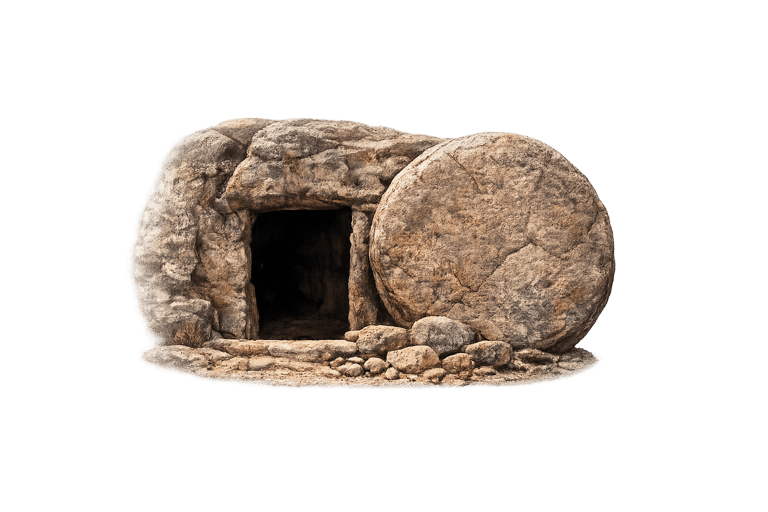
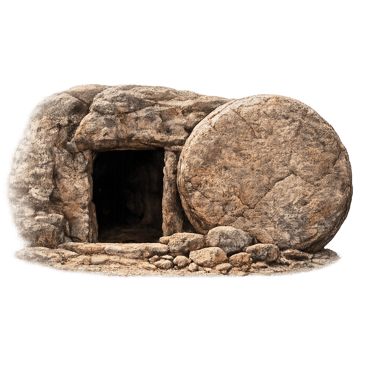
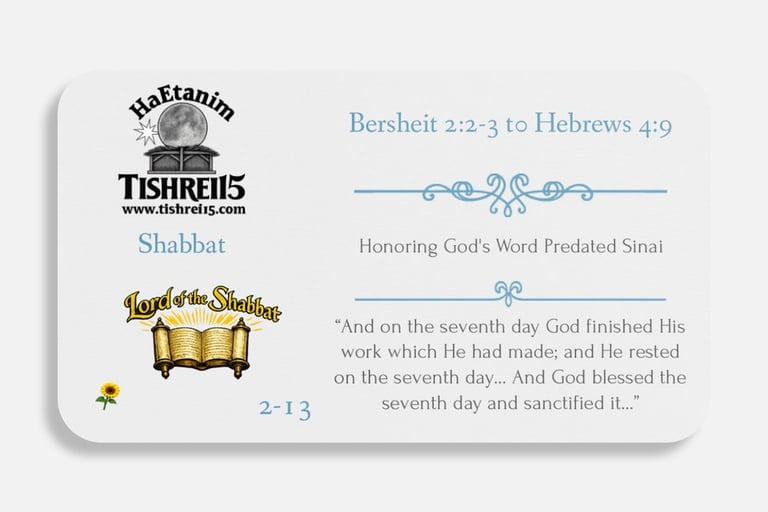
the Firstborn from the dead, the Firstfruits rising on the very day the barley was lifted before YHWH. (Firstfruits) Because it was Shabbat, the women could not come to the tomb. They waited. They honored the command. They approached only early on the first day of the week, which was Nisan 18, and found not the moment of resurrection, but the aftermath, the High Priest already gone, the offering already accepted. (High Priest typology) This is why Paul can call Him “our Firstfruits”, and why the Gospels reveal Him as Lord of the Shabbat,


Faith
Nature
contact@tishrei15.com
© 2025. All rights reserved.