Announcing that the great day of the lord is nearer than you think. O Come let us adore him - Luke 2:13
Ring H
3-13
פֶּסַח
Passover
The One of the Flock, the Masculine Grammar, and the Two Liftings
Hebrew grants no neuter. Every creature, every vessel of covenant meaning must stand either masculine or feminine before the text. Thus when the Torah speaks its Passover statute in Exodus 12:43–51, it cannot hide the ordinance behind a translation forming a neutral “it.” It binds the entire command to the masculine singular - בּוֹ - a form that always bears the contour of a “him.” Though the plain sense points back to the שֶׂה, the one of the flock, of Exodus 12:3–5, the grammar refuses to let the reader forget that this substitute stands as a covenant representative, a life taken in place of the firstborn (Exodus 12:12–13).
This Hebrew masculine suffix - וֹ - lifts the Passover victim beyond the level of mere animal. It becomes a figure - the bearer of the household’s fate, the one whose blood marks the door (Exodus 12:7) and whose flesh is eaten in the night of deliverance (Exodus 12:8–11). Thus the text opens a double vision: “eat of it” in the immediate sense, yet “participate in him” in the pattern. The grammar itself becomes a shadow‑script of the One who would come from the flock of Israel, examined (Exodus 12:5), taken, slain, and in whom the people find their deliverance (Isaiah 53:7; 1 Corinthians 5:7; 10:16).
This is where the Temple and Golgotha meet.
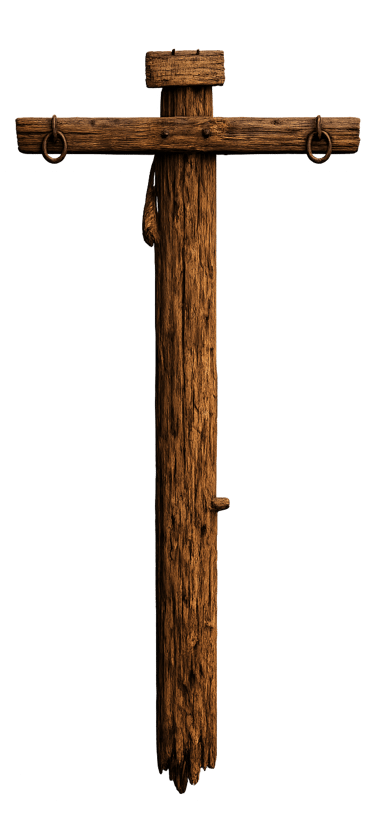
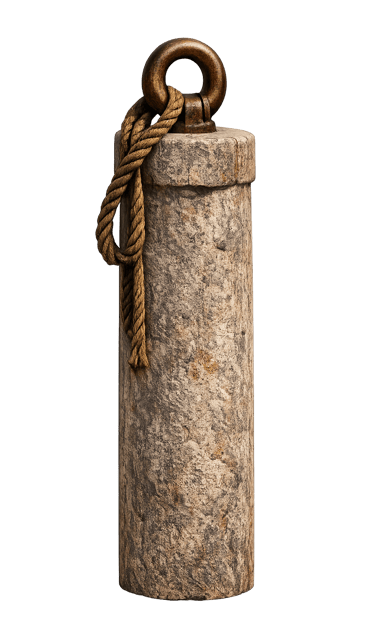
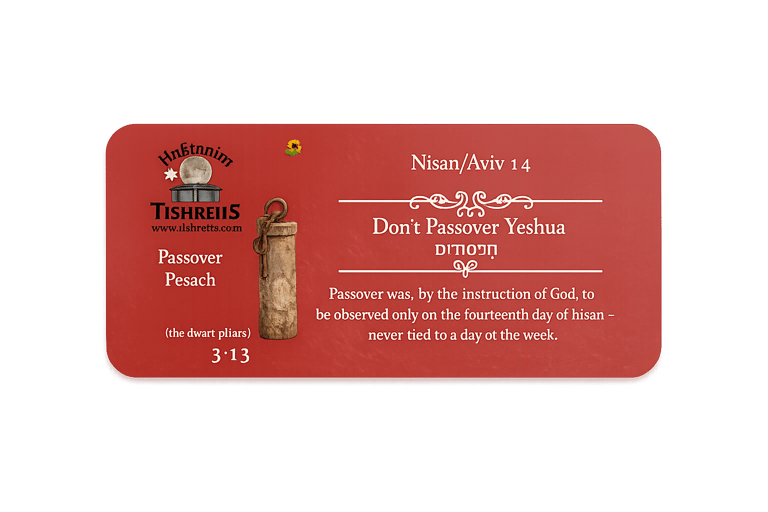
For inside the Temple courts stood the עַמּוּדִים קְטַנִּים, the dwarf pillars, each crowned with cedar blocks that received the iron hooks. Upon these the daily offerings were lifted up, suspended between earth and sky - a body raised, its blood descending to the base. This was the priestly geometry of sacrifice, the architecture of substitution enacted in wood and flesh.
Outside the city, Rome unknowingly reenacted the same silhouette. The σταυρός (Latin crux), the upright post, received the πατίβολον (Latin patibulo), the cross‑beam. A man was lifted upon it, suspended between earth and sky - a body raised, His blood descending to the ground. Two cultures, two structures, yet the same outline: vertical post, horizontal wood, the lifted substitute. For the place of crucifixion is called by the transliterated word - Golgotha - גֻּלְגֹּלֶת, “skull.” This is not a random hill name. In the Tanakh, גֻּלְגֹּלֶת (Hebrew) is the word used when Israel is counted by skull, by head, by individual covenant identity (Exodus 38:26; Numbers 1:2; 3:47; 1 Chronicles 23:3). It is the place‑name that echoes the presentation of the skull, the accounting of each life before God.
The ancient tradition places this site on the eastern slope, toward the Mount of Olives — the very region where Israel once stood as a body, counted by skull, presented as a people, each life acknowledged before the Holy One.
Consequently the place where Yeshua was lifted up is not accidental. It is the place where Israel once presented its skulls, its גֻּלְגֹּלֶת, its covenant identity, and now the Representative of Israel is lifted up in their place, bearing their fate, carrying their judgment, offering His life where theirs once stood.
Thus the masculine בּוֹ of Moses, the lifted seh of Exodus, the dwarf pillars of the Temple, and the Roman cross of Golgotha all converge. The grammar of Passover and the architecture of sacrifice speak with one voice.
So when John the Baptist lifted his hand toward Yeshua, he was not thinking in Greek categories. He was:
a Judean priest’s son,
raised inside the cadence of Torah,
preaching to Israelites,
speaking in the conceptual world of Hebrew and Aramaic.
His declaration would not have been the narrow Greek ἀμνός - the sacrificial lamb of later Christian imagination. It would have been the older, broader word:
הִנֵּה הַשֶּׂה שֶׁל אֱלֹהִים Behold, the one of the flock of God
Not a lamb. Not a baby sheep. Not the soft pastoral image inherited from medieval art.
But the seh הַשֶּׂה - a covenant member of Israel’s flock, chosen, appointed, set apart for divine purpose, the One who would be lifted up as the offerings were lifted, the One in whom the people would participate, the One whose blood would mark the true door of deliverance.
Thus the suffix, in green, in the Hebrew word בּוֹ becomes prophecy. The vocabulary becomes witness. The pillars become pattern. The cross becomes fulfillment. And the one of the flock becomes the Messiah.
עַמּוּדִים קְטַנִּים, the dwarf pillars
crux cum patibulo
Don't Passover Yeshua.
Hebrew Year 3790 a CR354
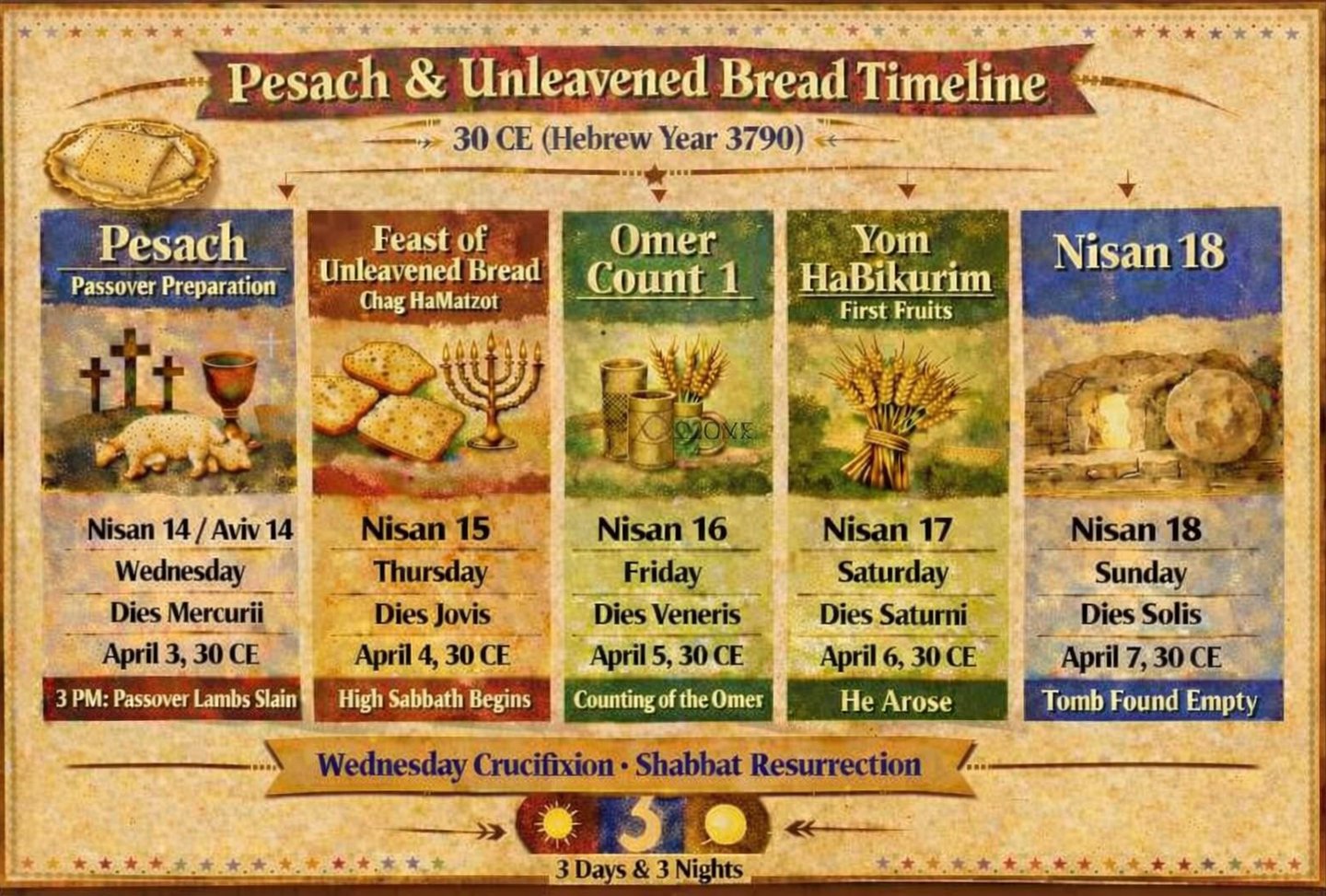
1. Nisan 14 - Pesach Preparation (Lambs at 3 PM) Moed
Hebrew Day: Yom Rvi’ee
English Day: Wednesday
Roman Day: Dies Mercurii
Julian: April 5
Gregorian: April 3
AUC: 783
2. Nisan 15 - First Day of Unleavened Bread Moed
Hebrew Day: Yom Chamishi
English Day: Thursday
Roman Day: Dies Jovis
Julian: April 6
Gregorian: April 4
3. Nisan 16 - 2nd Day of Matzah / Omer Day 1
Hebrew Day: Yom Shishi
English Day: Friday
Roman Day: Dies Veneris
Julian: April 7
Gregorian: April 5
4. Nisan 17 - First Fruits (HaBikkurim) Moed
Hebrew Day: Yom Shabbat
English Day: Saturday
Roman Day: Dies Saturni
Julian: April 8
Gregorian: April 6
5. Nisan 18 - “Empty Tomb” (Matthew 28:1)
Hebrew Day: Yom R’Shon
English Day: Sunday
Roman Day: Dies Solis
Julian: April 9
Gregorian: April 7
No Work Allowed - Shabbat Rule
No Work Allowed - Shabbat Rule
This event is anchored to the Fourteenth of Nisan, immovable, God‑appointed, and covenant‑fixed. To wrench it from that day, to fasten it instead to a day of the week, or to bind it to the cycles of later liturgical tradition, is to fracture the narrative and mislead the reader.
The sacred text was never meant to bow to inherited systems. It is not clay for the potter’s wheel of Western custom, nor a vessel to be reshaped by the hands of medieval liturgy. It must be received as it was given, in the time God spoke, not the time men later preferred.
Only by returning to the calendar God Himself ordained does the story rise upright again, freed from the distortions layered upon it through the classical and medieval ages. Restoration begins here: letting Scripture speak in its own time, with its own cadence, and in its own unaltered order.
This is not, nor must it ever become, an anachronism. The event stands in its own appointed time, and no later tradition has the authority to drag it out of the Fourteenth of Nisan into the frameworks of another age.
He is not the One to be passed over by the Angel of Death (Exodus 12:12–13). He is the One whosteps into the judgment so that we may step out of it (Isaiah 53:5–6; 2 Corinthians 5:21). He is not spared, we are (Romans 5:8–9).
He is not speaking as a wandering visitor, not as a guest seeking shelter, not as a traveler hoping for welcome (cf. Luke 9:58).
He speaks as the One whose blood is already on the doorposts (Exodus 12:7, 22–23), the One who marks the threshold with His own life (John 10:7, 11), the One who stands where the blow should fall and takes it into Himself (Isaiah 53:10; John 1:29).
The Lamb is not passed over because the people must be (Exodus 12:27). The Shepherd becomes the doorway (John 10:7–9). The blood becomes the shield (Exodus 12:13; Hebrews 9:12–14). The judgment passes because He does not (Isaiah 53:8; Romans 8:3).
This is the reversal at the heart of redemption: the One from the flock becomes the One who bears the brunt (Isaiah 53:7; John 1:36), the One who should have been protected becomes the One who protects (John 10:11, 15), the Passover becomes personal (1 Corinthians 5:7), and the doorway becomes Him (John 10:9; Revelation 3:20).
Faith
Nature
contact@tishrei15.com
© 2025. All rights reserved.